Ryan Malloy
4ec43b269f
Ryan Malloy
4ec43b269f
src/assets/manual/omnipro-ii-wordmark.png
  Lifted from the Owner's Manual cover (Owner_s_Manual_page_1_img_1).
  1280x592, 13KB, 8-bit grayscale. Used as the eager-loaded hero on
  index.mdx via Astro's Image component, with CSS filter:invert(1) so
  the black-on-white wordmark renders crisp on the dark theme.

src/assets/screenshots/  (six PNGs, copied from omni-pca/dev/artifacts):
  01-overview.png            HA Lovelace
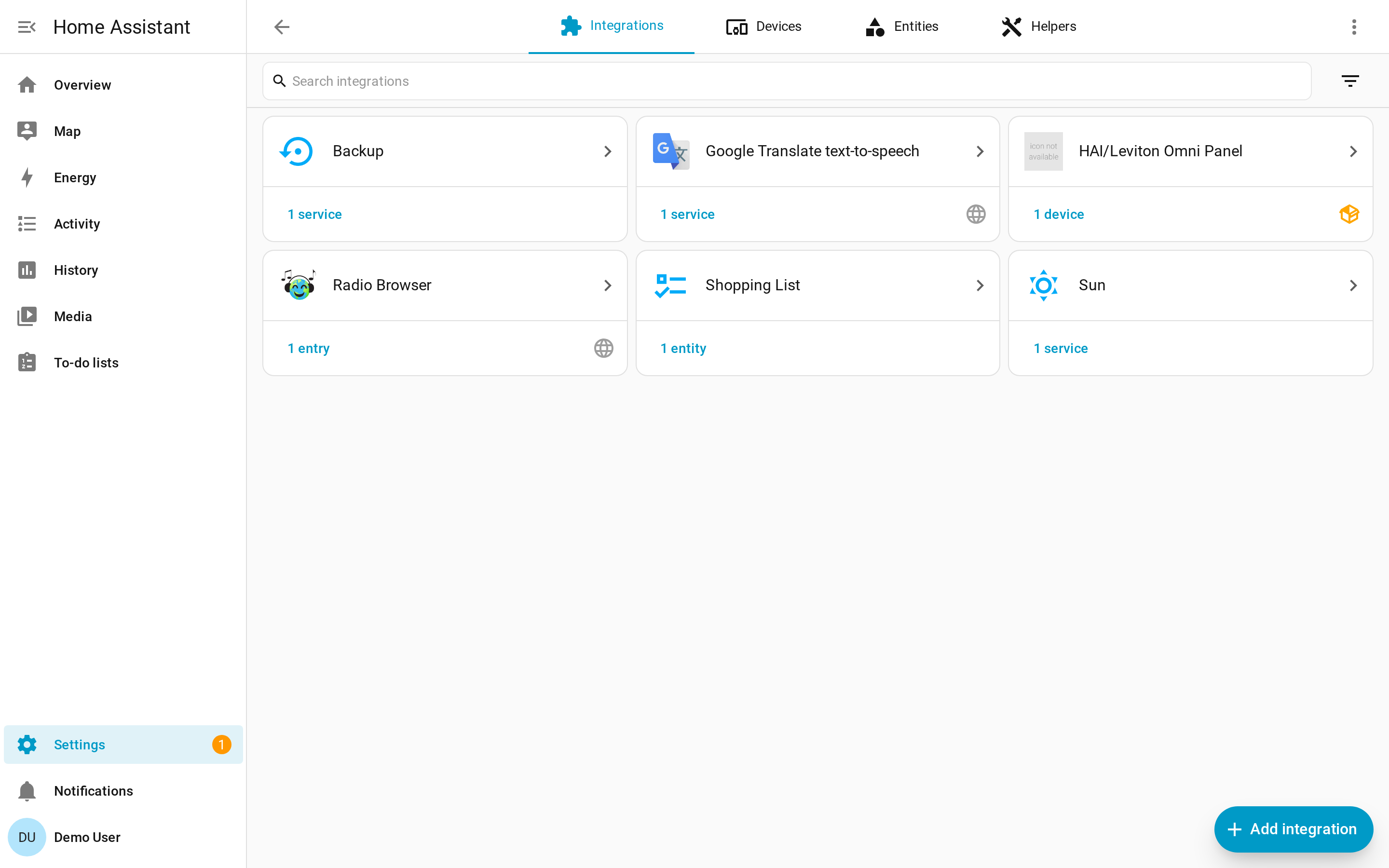
  02-integrations-list.png   HAI/Leviton tile in the integrations list
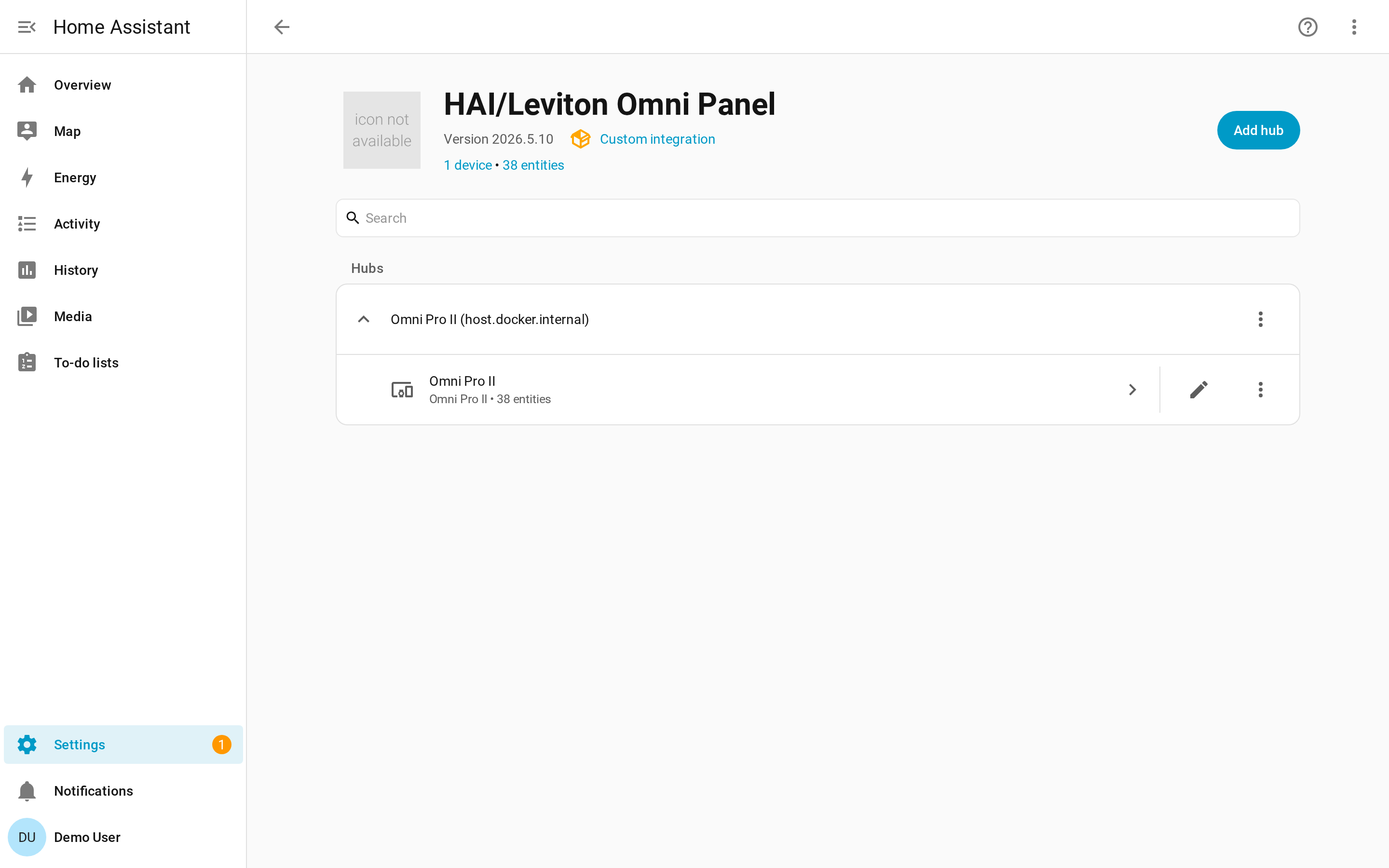
  03-omni-pca-config.png     '1 device, 38 entities' integration page
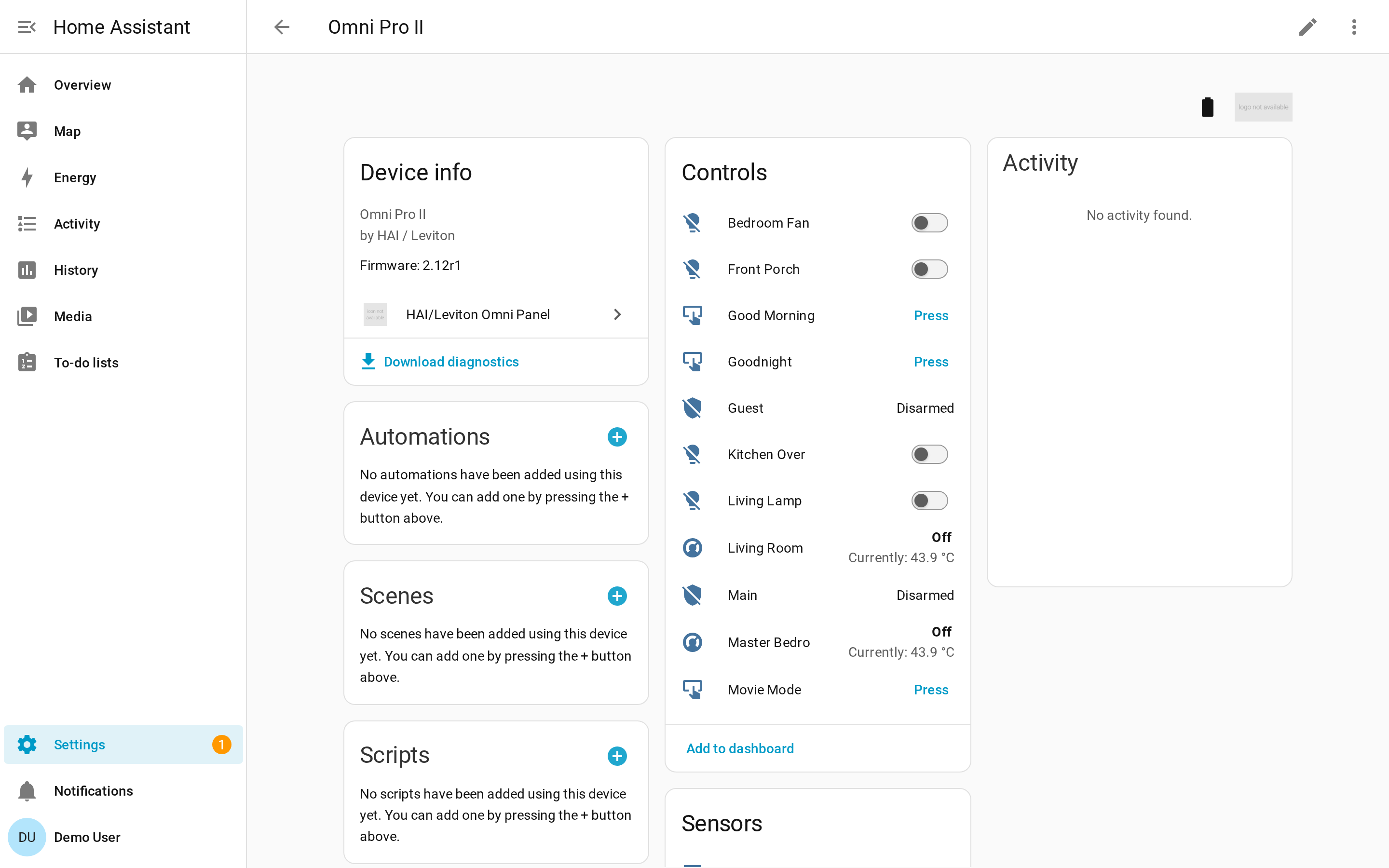
  04-panel-device.png        Omni Pro II device page with all controls
  05-entities-omni.png       config-entry filtered entity table
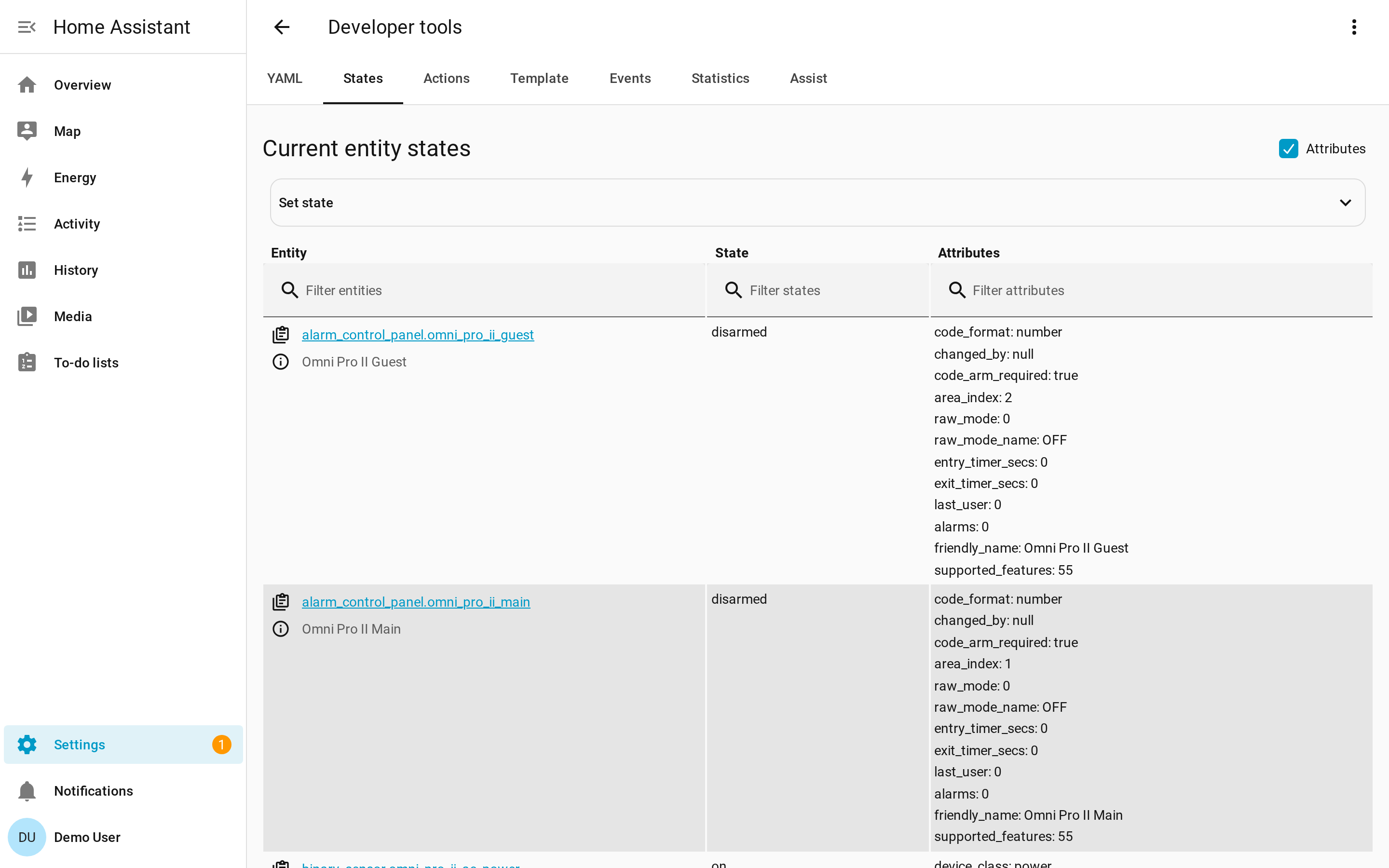
  06-developer-states.png    alarm_control_panel.omni_pro_ii_main raw
                             attributes from Developer Tools

Wired into pages:

  index.mdx                       wordmark hero (eager load)
  start/quickstart.md             04-panel-device.png at the bottom of
                                  step 3 so the reader sees the payoff
  reference/ha-entities.md        new 'What it looks like in HA' section
                                  with four screenshots (integrations
                                  list, integration detail, device page,
                                  developer states)

Astro Image processed all screenshots into webp at request size:
  06-developer-states 188 KB -> 91 KB after VP8 encoding.

Build: 13 pages clean in 1.66s, sitemap and Pagefind index regenerated.
Container rebuilt + recreated; verified HTTP 200 with 33315-byte index
page and the /reference/ha-entities/ page references four /_astro/*.webp
URLs that all return 200 from the running container.
9.1 KiB
| title | description |
|---|---|
| Home Assistant entity catalogue | One device per panel plus typed entities for every named object — alarm panels, lights, binary sensors, climates, sensors, buttons, switches, and a typed event relay. |
The integration creates one HA device per Omni panel. Every named object on the controller (zones, units, areas, thermostats, buttons) is materialised as one or more typed entities below. Discovery happens once at first refresh; live state propagates over the panel's unsolicited push channel within one TCP round-trip, with a 30-second poll backstopping anything that didn't push.
| Platform | Entity | Per |
|---|---|---|
alarm_control_panel |
Area arm/disarm with code | discovered area |
binary_sensor |
Zone open/tripped | binary zone |
binary_sensor |
Zone bypassed (diagnostic) | binary zone |
binary_sensor |
AC power, backup battery, system trouble | panel |
button |
Panel button macro | discovered button |
climate |
Thermostat (heat/cool/auto, fan, hold) | discovered thermostat |
event |
Typed push event relay | panel |
light |
Unit on/off + brightness | discovered unit |
sensor |
Analog zone (temp/humidity/power) | analog zone |
sensor |
Thermostat current temp / humidity / outdoor temp | thermostat |
sensor |
Panel model + firmware, last event class | panel |
switch |
Zone bypass toggle | binary zone |
alarm_control_panel
One per discovered area (OmniAreaAlarmPanel). Surfaces the area's current
SecurityMode translated into HA's AlarmControlPanelState enum:
OFF→disarmedDAY→armed_homeNIGHT→armed_nightAWAY→armed_awayVACATION→armed_vacationDAY_INSTANT→armed_custom_bypassARMING_*(security modes 9..14) →arming- entry-timer running →
pending alarms != 0→triggered
Supported features: ARM_HOME, ARM_NIGHT, ARM_AWAY, ARM_VACATION,
ARM_CUSTOM_BYPASS. Code validation is enforced server-side: the user's
PIN is sent through ExecuteSecurityCommand (opcode 74). Wrong code raises
an HA ServiceValidationError.
Attributes: area_index, mode_name, entry_timer_secs, exit_timer_secs,
alarm_active, alarm_bitfield.
binary_sensor
Three flavours.
Per binary zone — open/tripped (OmniZoneBinarySensor).
device_class is derived from the zone's ZoneType:
| ZoneType | HA BinarySensorDeviceClass |
|---|---|
| ENTRY_EXIT, PERIMETER, NIGHT_INTERIOR, AWAY_INTERIOR, DELAY, LATCHING | door / window (opening) |
| FIRE, FIRE_EMERGENCY, FIRE_TAMPER | smoke |
| GAS | gas |
| WATER | moisture |
| FREEZE | cold |
| TAMPER, LATCHING_TAMPER | tamper |
| TROUBLE | problem |
| temperature/humidity types | (handled by sensor instead) |
State: on when the zone is open / not-secure / tripped. Attributes:
zone_index, zone_type, area, current_state, latched_state,
arming_state, is_in_alarm, is_trouble.
Per binary zone — bypass diagnostic (OmniZoneBypassBinarySensor).
entity_category = DIAGNOSTIC, on iff the zone is currently bypassed
(user or auto-bypass).
Per panel — system trouble triplet. Three diagnostic sensors per panel:
binary_sensor.{name}_ac_power— on iff AC is OK (inverted fromAcLost)binary_sensor.{name}_backup_battery— on iff battery OKbinary_sensor.{name}_system_trouble— on iff any current trouble
These mirror the typed events AcLost/AcRestored, BatteryLow/
BatteryRestored, and DcmTrouble/DcmOk.
button
One OmniButton per discovered panel button macro. Pressing the HA button
dispatches a Command.EXECUTE_BUTTON (parameter2 = button index). No state.
This is the only entity for "scenes" — Omni "scenes" are user-named button
macros, so adding a parallel scene platform would just double-count.
climate
One OmniClimate per discovered thermostat. Maps the panel's HvacMode
FanMode+HoldModetriple onto HA'sHVACMode, fan modes, and preset modes. Setpoints are translated through theomni_temp_to_*helpers so HA can display whatever unit the user prefers.
Supported features: TARGET_TEMPERATURE (single setpoint), or
TARGET_TEMPERATURE_RANGE when in HEAT_COOL/auto mode. Fan: auto, on,
cycle. Preset: none, hold, vacation.
Attributes: thermostat_index, humidity_percent, outdoor_temperature_*,
humidify_setpoint_raw, dehumidify_setpoint_raw, horc_status (1=heating
active, 2=cooling active).
event
One OmniPanelEvent per panel. Surfaces the typed push-event stream as a
single HA event entity with event_types:
zone_state_changed       unit_state_changed       arming_changed
alarm_activated          alarm_cleared
ac_lost                  ac_restored
battery_low              battery_restored
user_macro_button        phone_line_dead          phone_line_restored
Plus an unknown catch-all for the 14 less-common SystemEvent subclasses.
Each event carries the originating dataclass's fields in event_data
(zone index, area, alarm type, etc.), plus a raw_word for debugging.
Automations key on platform: state filtered by attributes.event_type.
See HA services → automation example for a
worked snippet.
light
One OmniLight per discovered unit. Dimmer state is a single byte that
encodes a lot:
| State byte | Meaning |
|---|---|
| 0 | Off |
| 1 | On (relay; no level info — exposed as 100% brightness) |
| 2..13 | Scene A..L (state - 63 → ASCII) |
| 17..25 | Dim 1..9 (state - 16) |
| 26 | Blink |
| 33..41 | Brighten 1..9 (state - 32) |
| 100..200 | Brightness 0..100% (state - 100) |
Non-dimmable relays silently ignore brightness. Conversion is done in pure
helpers (omni_state_to_ha_brightness, ha_brightness_to_omni_percent)
unit-tested without HA in the venv.
Attributes: unit_index, time_remaining_secs (panel-side timer for
auto-off; 0 = indefinite).
sensor
Three flavours.
Per analog zone. Zones with ZoneType in
{TEMPERATURE, OUTDOOR_TEMP, HUMIDITY, TEMP_ALARM, ENERGY_SAVER, FREEZE} get a
sensor entity instead of (or in addition to) a binary sensor. Unit is
inferred from the zone type — temperature in °F/°C, humidity as %,
power-related as W.
Per thermostat. Three sub-sensors per thermostat:
sensor.{name}_temperature— current measured tempsensor.{name}_humidity— humidity percentsensor.{name}_outdoor_temperature— outdoor temp (if reported)
Per panel. Two info sensors:
sensor.{name}_panel_model— model name + firmware version (state)sensor.{name}_last_event— class name of the most recent SystemEvent (ZoneStateChanged,ArmingChanged, etc.) with the raw word as an attribute
switch
One OmniZoneBypassSwitch per binary zone, entity_category = CONFIG.
Toggling the switch dispatches Command.BYPASS_ZONE /
Command.RESTORE_ZONE. State mirrors the bypass diagnostic binary sensor
above.
What gets discovered
Only objects with a name set on the panel are discovered — that's the panel's own definition of "this slot is in use". To populate names, use PC Access's "Names" page (or any other Omni programmer). On a fresh factory-default panel you'll see zero entities; configure object names first, then reload the integration.
Where to look in source
| Class | File |
|---|---|
OmniAreaAlarmPanel |
custom_components/omni_pca/alarm_control_panel.py |
OmniZoneBinarySensor, OmniZoneBypassBinarySensor |
binary_sensor.py |
OmniButton |
button.py |
OmniClimate |
climate.py |
OmniPanelEvent |
event.py |
OmniLight |
light.py |
| sensor classes | sensor.py |
OmniZoneBypassSwitch |
switch.py |
All of them sit on top of OmniDataUpdateCoordinator (coordinator.py),
which keeps a long-lived OmniClient, runs one-time discovery on first
refresh, and patches state in-place from the typed event stream.
What it looks like in HA
The integration appears alongside the rest of HA's built-in integrations in Settings → Devices & Services:
Clicking through, the integration page reports the discovered counts and the hub:
The device page is where every entity surfaces. Lights and switches with toggles, areas with arm states, thermostats with current temperature and setpoints, panel-button macros with Press buttons, plus the Diagnostics download:
Developer Tools → States exposes the raw entity payloads — useful for template authoring and for confirming an attribute is wired through: